

Spondyloarthritis Heidelberg
When joints, tendons and spine hurt
The spondyloarthritides (SpA) are a group of diseases in which, besides the joints, the tendons and the spine are frequently affected. They are associated with the genetic marker HLA-B27.
A distinction is made between peripheral involvement (affecting joints and tendons) and axial involvement (affecting the spine).

Forms of spondyloarthritis
The spondyloarthritides can be divided into several forms:
Inflammatory back pain
The hallmark of axial spondyloarthritis – spondyloarthritis with spinal involvement – is inflammatory back pain.
Inflammatory back pain is characterised as follows:
- chronic, usually deep-seated back pain lasting more than three months
- onset before the age of 45
- gradual onset
- improvement with movement
- no improvement with rest
- pain at night
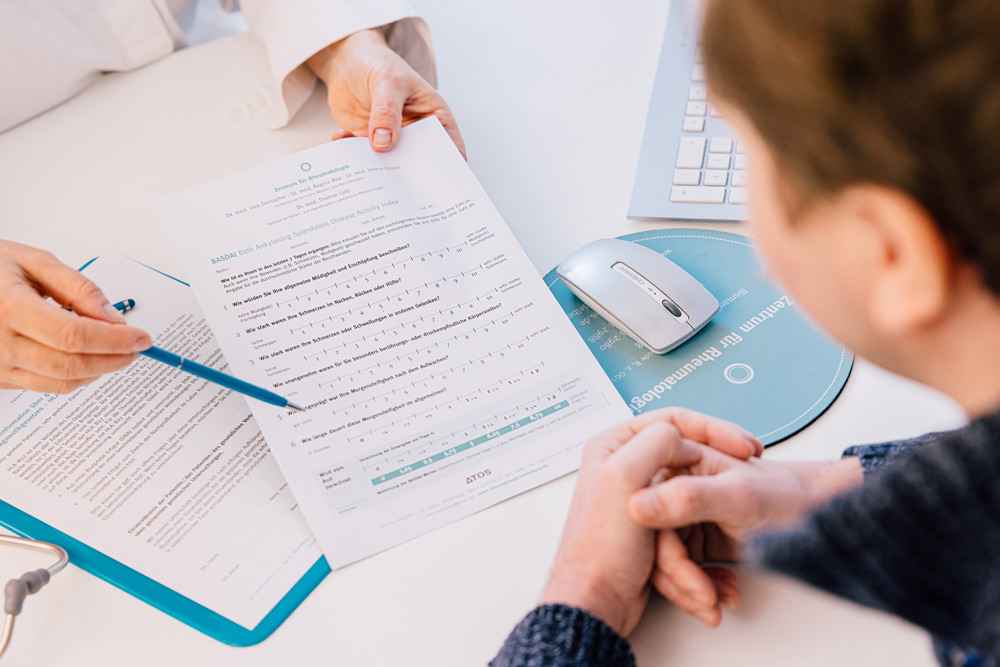
History taking in spondyloarthritis
As with all rheumatic diseases, taking the medical history is a key element in diagnosing spondyloarthritis.
We ask about the character of the pain (inflammatory pain: pain at rest? at night? worst in the morning? morning stiffness?). We also look and ask for the following symptoms that can occur with spondyloarthritis:
- psoriasis in the patient or a close relative
- inflammatory bowel disease (Crohn’s disease, ulcerative colitis) in the patient or a close relative
- chronic, usually deep-seated back pain at rest (see inflammatory back pain)
- painful joint swelling
- frequent tendon inflammation (enthesitis)
- dactylitis (sausage-like swelling of an entire finger or toe, hence “sausage finger”/“sausage toe”)
- deep eye inflammation (uveitis)
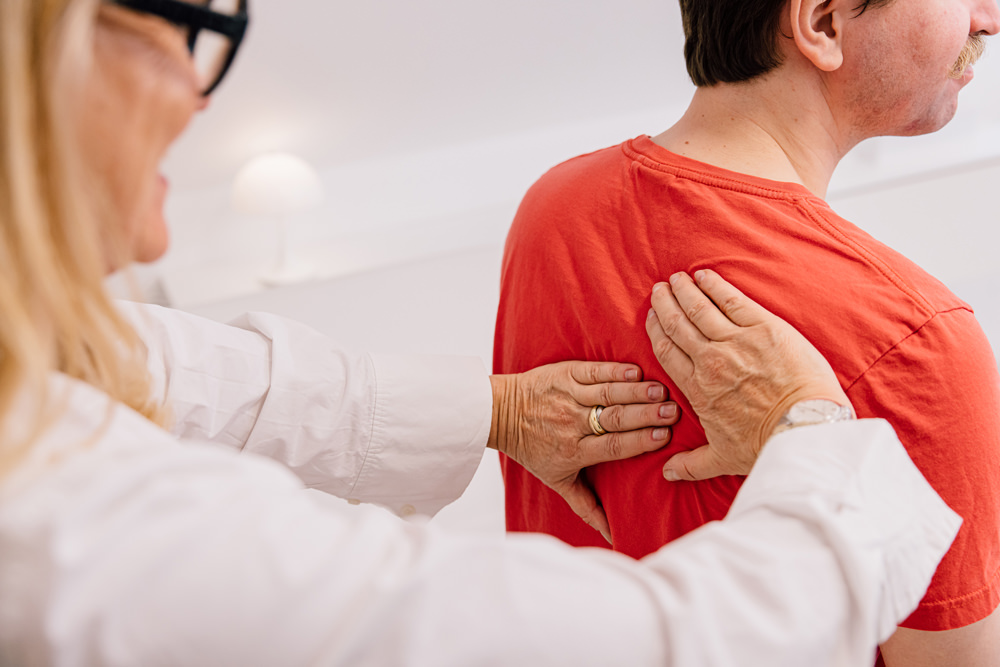
Diagnosing spondyloarthritis
HLA-B27
HLA-B27 is a genetic marker on the white blood cells (leukocytes) associated with the spondyloarthritis group of diseases. A positive HLA-B27 result does not necessarily mean that a patient has spondyloarthritis, however, since around 8% of the healthy population is HLA-B27 positive.
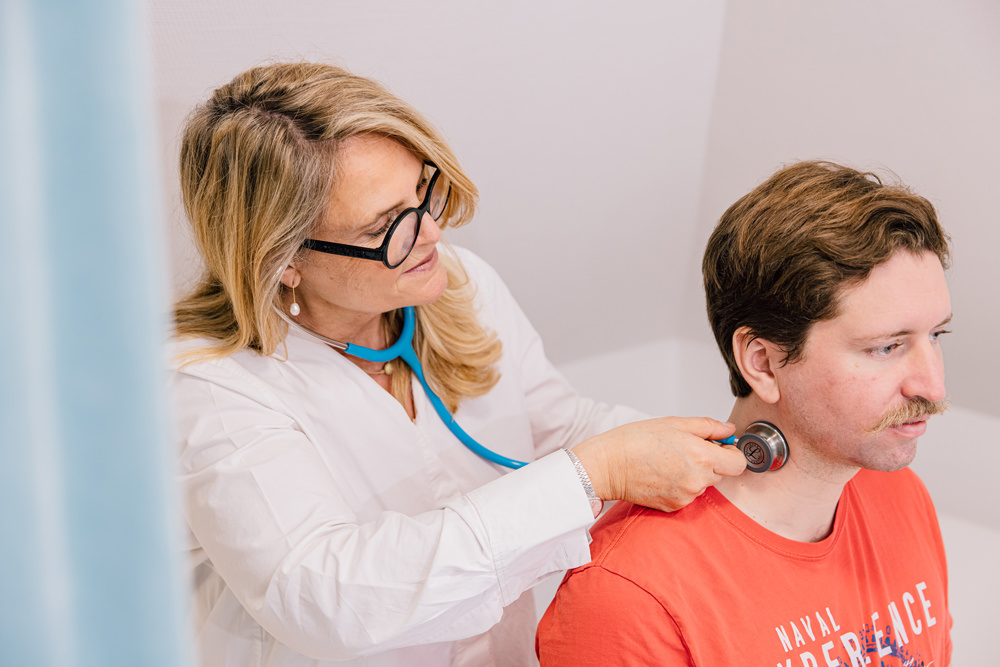
Treating spondyloarthritis
Treatment depends on the symptoms. Anti-inflammatory painkillers (NSAIDs, e.g. ibuprofen) can relieve pain and inflammation. Besides cortisone (glucocorticoids), used mainly for joint inflammation, sulfasalazine (e.g. in reactive arthritis) or methotrexate may be used. Where tendons or the spine are involved, cortisone and NSAIDs are often not sufficient, so in severe cases – particularly with spinal involvement – biologics are used (e.g. infliximab, adalimumab, certolizumab, golimumab, secukinumab, ustekinumab).
In addition to drug treatment, physiotherapy is extremely important, especially with spinal involvement, to maintain mobility. Patients should exercise regularly on their own. Joining a self-help group (in Germany the Deutsche Vereinigung Morbus Bechterew, DVMB) is recommended, as local groups offer weekly land and water exercise sessions.
Do you have further questions or need a diagnostic work-up? You are welcome to make an appointment at the Centre for Rheumatology Heidelberg.
Back to all services
Make an appointment