

Our services
Diagnostics and treatment at our rheumatology practice

Rheumatic diseases
“Rheumatism” is not a single disease but an umbrella term for around 400 different conditions. The age range of patients is wide, and rheumatic diseases can occur at any age.
There are inflammatory and non-inflammatory rheumatic diseases. Joints, tendons and muscles are frequently affected. Because rheumatic diseases are systemic, other organs such as the kidneys, heart, lungs, gastrointestinal tract, eyes, skin, blood vessels and nervous system are often involved as well. Working up these systemic diseases requires a high level of expertise, which the Centre for Rheumatology at the ATOS Clinic Heidelberg provides.
Because the complaints are so varied, it is often hard to interpret one’s own symptoms correctly and to see a doctor early. On the following pages we would like to give you a closer look at how these diseases present. Please note that this information can only offer a brief insight into the conditions and does not replace a specialist examination.
Diagnostic procedures for rheumatic diseases
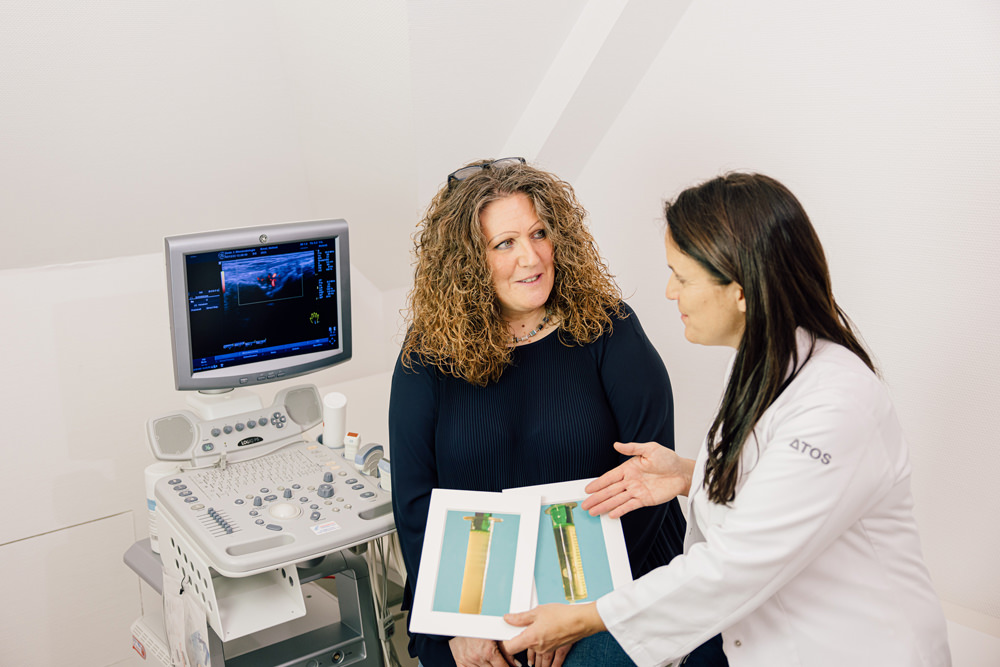
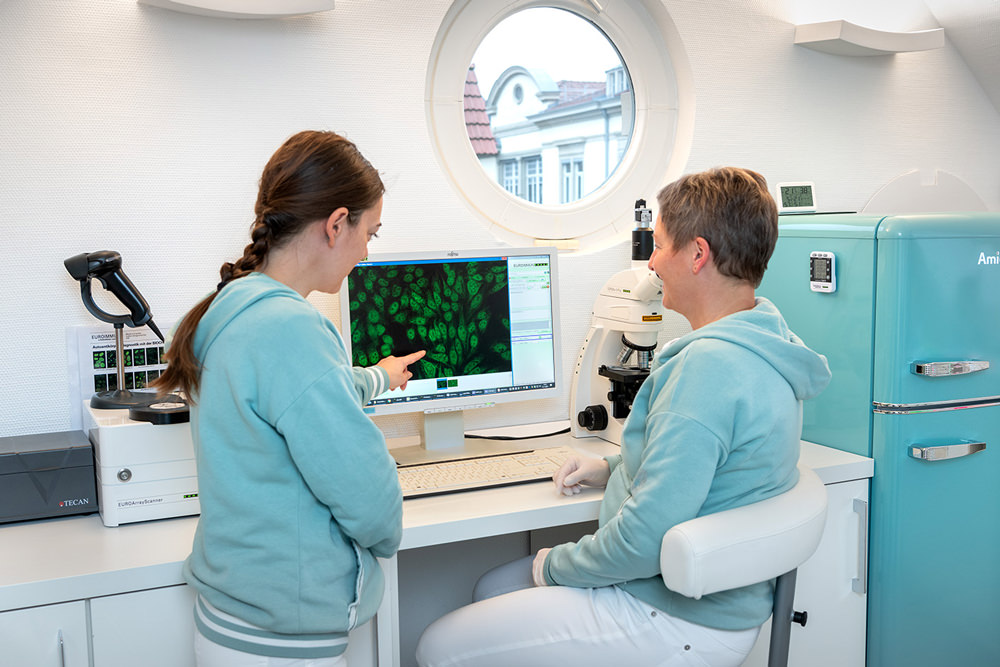
Every diagnosis naturally begins with a detailed history, in which we ask about your medical history, your current complaints and any concomitant diseases. The physical examination includes a general internal medicine status (heart, lungs, lymph nodes and more). All joints, the tendons and the spine are assessed, and we look for further clues such as changes to the skin or nails or neurological signs, which can also develop in connection with an inflammatory rheumatic disease. Depending on your symptoms, this is supplemented by ultrasound examinations of joints, internal organs and blood vessels. Our own autoimmune laboratory allows specialised rheumatological testing to be carried out promptly on site. In the case of joint swelling, a joint aspiration can be performed with immediate examination of the synovial fluid under the practice’s own polarising microscope.
Laboratory diagnostics in the work-up of inflammatory rheumatic diseases are extensive and include important routine internal medicine tests. Depending on your complaints, we order additional differentiated immunological tests, which are performed in the Centre for Rheumatology’s own immunology laboratory.
Importantly, normal “rheumatism values” do not rule out a rheumatic disease.
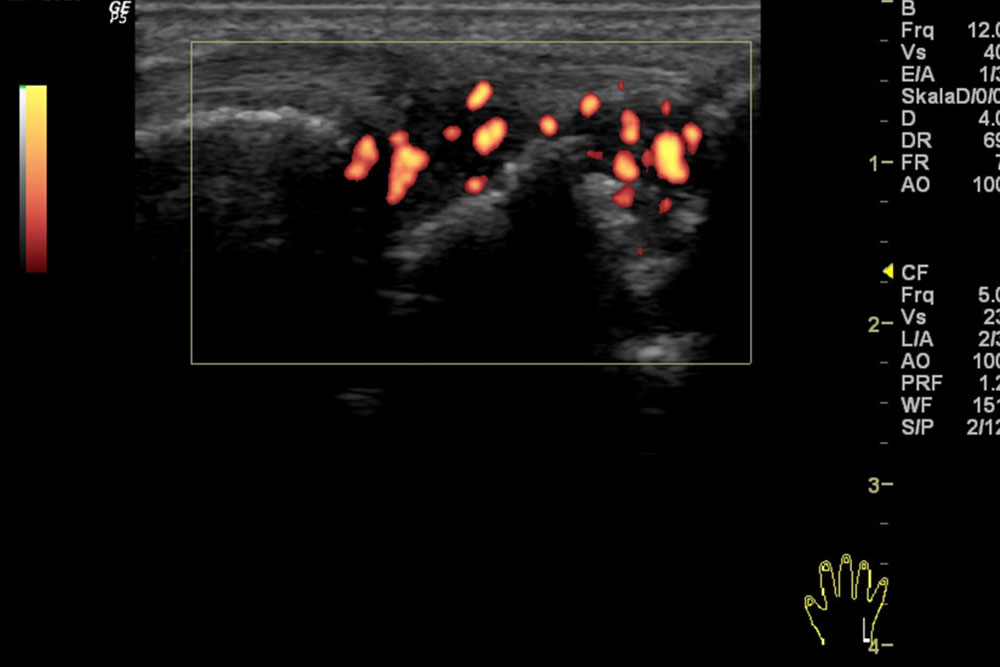
Ultrasound examinations are an important diagnostic building block in inflammatory rheumatic diseases. The Centre for Rheumatology has a high-quality ultrasound system with colour duplex and power Doppler, ideally suited to the varied requirements of internal medicine rheumatology. We scan affected joints as well as the abdominal organs, the thyroid and the heart (echocardiography).
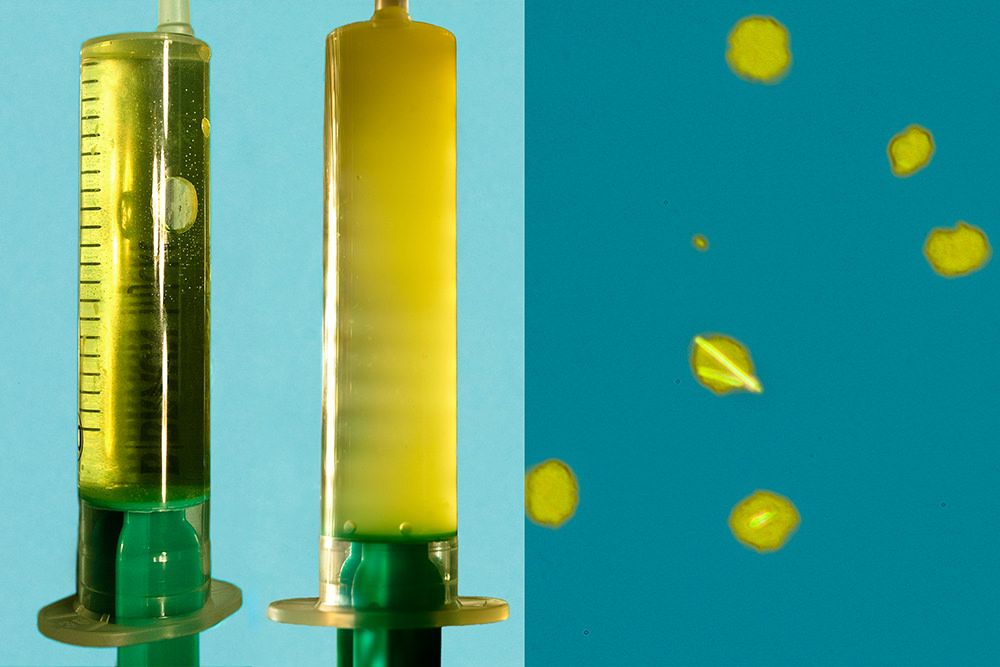
In the case of joint swelling, a joint aspiration can be performed to relieve pressure and for specific diagnostics. The synovial fluid is assessed under a polarising microscope immediately after it is taken. Counting the leukocytes (white blood cells) allows, among other things, a distinction between inflammatory rheumatic and degenerative (osteoarthritis) causes. Gout or pseudogout can also be diagnosed by polarising microscopy. Take a look through our microscope!
We also analyse synovial fluid for our orthopaedic, surgical and radiological colleagues at the ATOS Clinic and for cooperating physicians.
We can offer you a fast, radiation-free examination to visualise inflammatory changes in the hands. Xiralite® is an innovative imaging technique for diagnosing inflammatory joint disease of the hands. A dye widely used in medicine (indocyanine green) and a special camera system make inflammation visible. In an examination time of just six minutes, all 32 joints of both hands can be assessed simultaneously. The specific distribution pattern provides information about the underlying disease. This novel method allows rheumatic inflammation to be detected at an early stage and treatment to be monitored in unclear cases.

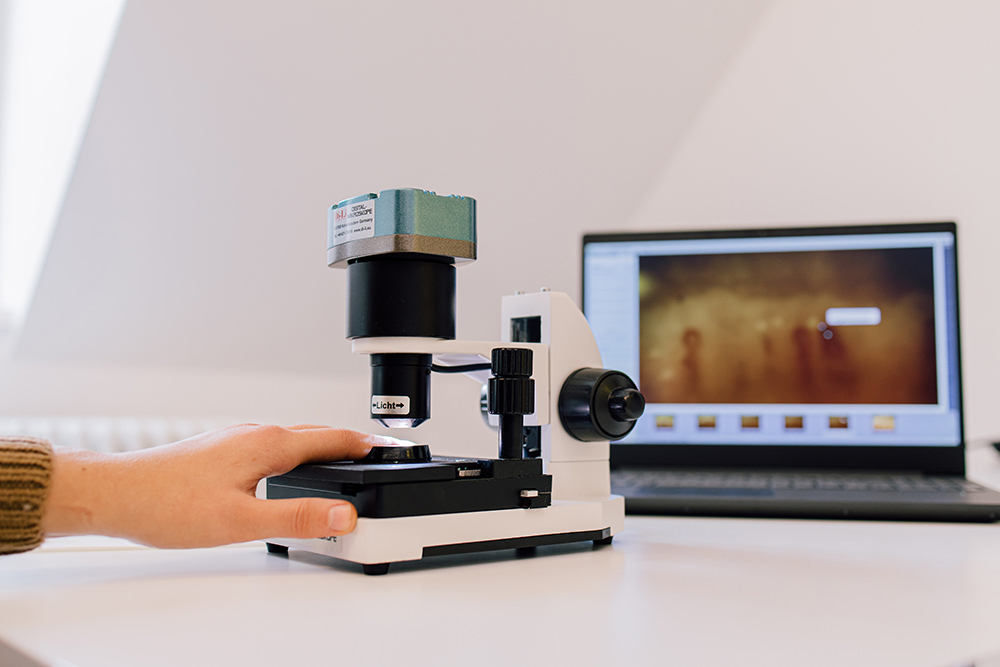
The smallest blood vessels at the nail fold are assessed under a microscope. The procedure is painless and has no side effects, and it is particularly helpful for diagnosing and monitoring inflammatory connective tissue diseases.
An electrocardiogram (ECG) is part of the basic work-up for rheumatic diseases.


Treatments – help for rheumatic diseases
Every inflammatory rheumatic disease has its own constellation of symptoms and laboratory findings; severity and course vary greatly. Treatment must therefore be tailored to each individual’s situation and adjusted regularly. Fortunately, there are numerous treatment options today. Alongside long-established standard drugs such as anti-inflammatory painkillers (non-steroidal anti-inflammatory drugs, NSAIDs) and glucocorticoids (cortisone), many specific medications are now available for the various rheumatic diseases, including the newly developed biologics. In many cases these are antibodies that block a key inflammatory mechanism at a decisive point. These targeted therapies are often very successful and have few side effects.
With time, personal commitment and a wide range of diagnostic and therapeutic services, we take care of your health – competently and with trust – as your rheumatology practice in Heidelberg.
Any questions?
Simply give us a call or send us an e-mail. We will be glad to help.