

Connective tissue diseases Heidelberg
Diagnosis and treatment of inflammatory connective tissue diseases
Connective tissue diseases (collagenoses) are inflammatory diseases of the connective tissue. They are systemic diseases involving various organs. There are several forms (one typical feature of each is given in brackets):
- Systemic lupus erythematosus (butterfly rash)
- Sjögren’s syndrome (sicca symptoms = dry mucous membranes)
- Scleroderma (fibrotic skin changes)
- Dermatomyositis/polymyositis (muscle pain)
Mixed forms also occur; these are referred to as mixed connective tissue disease, overlap syndrome or Sharp syndrome.
The symptoms of connective tissue diseases are varied (a complete list is not possible here). Besides joint and muscle pain, general symptoms such as exhaustion, fever and weight loss, neurological symptoms and changes to the skin or mucous membranes can point to a connective tissue disease. Internal organs (lungs, kidneys, heart, liver) may also be involved.
Because the symptoms are so varied and different organs may be affected, the diagnostic work-up is extensive. Interdisciplinary cooperation between the various specialties is essential.

History, physical examination & laboratory tests
The medical history always comes first at a rheumatological consultation and is immensely important, because sometimes decisive clues to the disease only emerge from targeted questioning (for example, difficulty swallowing as a possible sign of scleroderma).
At the initial consultation in our practice we always carry out a thorough physical examination. In addition to the joints and spine, we examine the lungs, heart, lymph nodes, skin and nails and perform a basic neurological assessment. There are typical signs of the various connective tissue diseases (e.g. “Madonna fingers” or a thickened, shortened frenulum of the tongue in scleroderma, fingertip fissures or “mechanic’s hands” in myositis).
The Laboratory tests provide us with important facts. In addition to general internal medicine values, specific antibodies are determined in our practice’s own immunology laboratory. Antinuclear antibodies (ANA) can be markers of a connective tissue disease. The ANA pattern and further differentiation can point to individual forms (e.g. in systemic lupus erythematosus: homogeneous ANA pattern and double-stranded DNA antibodies).
Organ screening & capillaroscopy
To clarify whether other organs are affected, organ diagnostics are arranged. This is where the necessary interdisciplinary cooperation between the rheumatologist and the various specialists becomes clear.
The urine is tested for signs of kidney involvement; if abnormalities are found, patients are referred to a nephrologist. Cardiac involvement is ruled out by a cardiologist using ECG and echocardiography (cardiac ultrasound), among other tests. A pulmonologist performs a detailed examination including measurement of CO diffusion capacity and, if necessary, further radiological diagnostics (e.g. chest CT). For unclear neurological symptoms, a neurologist is consulted and initiates specific diagnostics (e.g. electromyography and, if required, muscle MRI and muscle biopsy). Assessing skin abnormalities requires close cooperation with a dermatologist, who may take a skin biopsy. To objectify sicca (dryness) symptoms, an ophthalmologist should carry out a work-up (Schirmer test, tear break-up time).
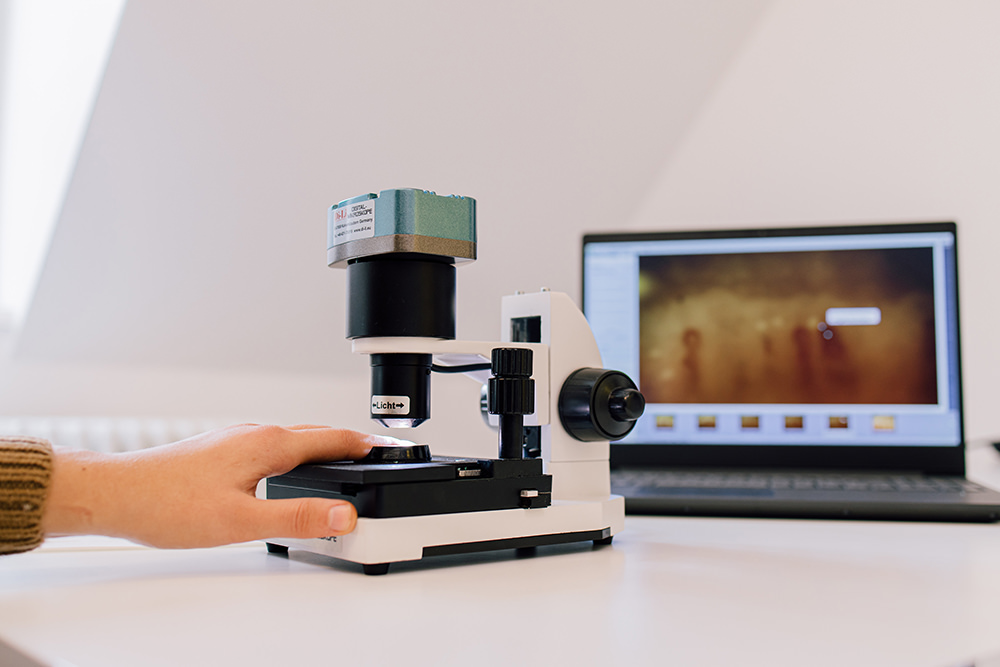
Capillaroscopy
In capillaroscopy, the smallest blood vessels at the nail fold are examined with a special microscope. The various connective tissue diseases often show typical changes or patterns. Capillaroscopy is a particularly helpful additional test for patients with Raynaud’s phenomenon (episodic blue-white-red discolouration of the fingers).

Treating connective tissue diseases
Many drugs are available to treat connective tissue diseases. The aim is to reduce the inflammatory processes that cause the disease. Glucocorticoids/cortisone bring rapid improvement. They are supplemented by immunomodulating drugs (hydroxychloroquine) or immunosuppressants (azathioprine, methotrexate, leflunomide) and, in more severe cases, mycophenolate and cyclophosphamide. Various biologics are also available today (including rituximab, belimumab, tocilizumab, abatacept and mepolizumab).
In the hands of an experienced rheumatologist, these drugs are safe. Before starting treatment, patients are informed in detail about the effects and possible side effects of the medication, and receive an information sheet – also for the co-treating general practitioner.
For comprehensive diagnosis and treatment of inflammatory connective tissue diseases, our specialists at the Centre for Rheumatology Heidelberg are here for you. We look forward to your appointment.
Back to all services
Make an appointment